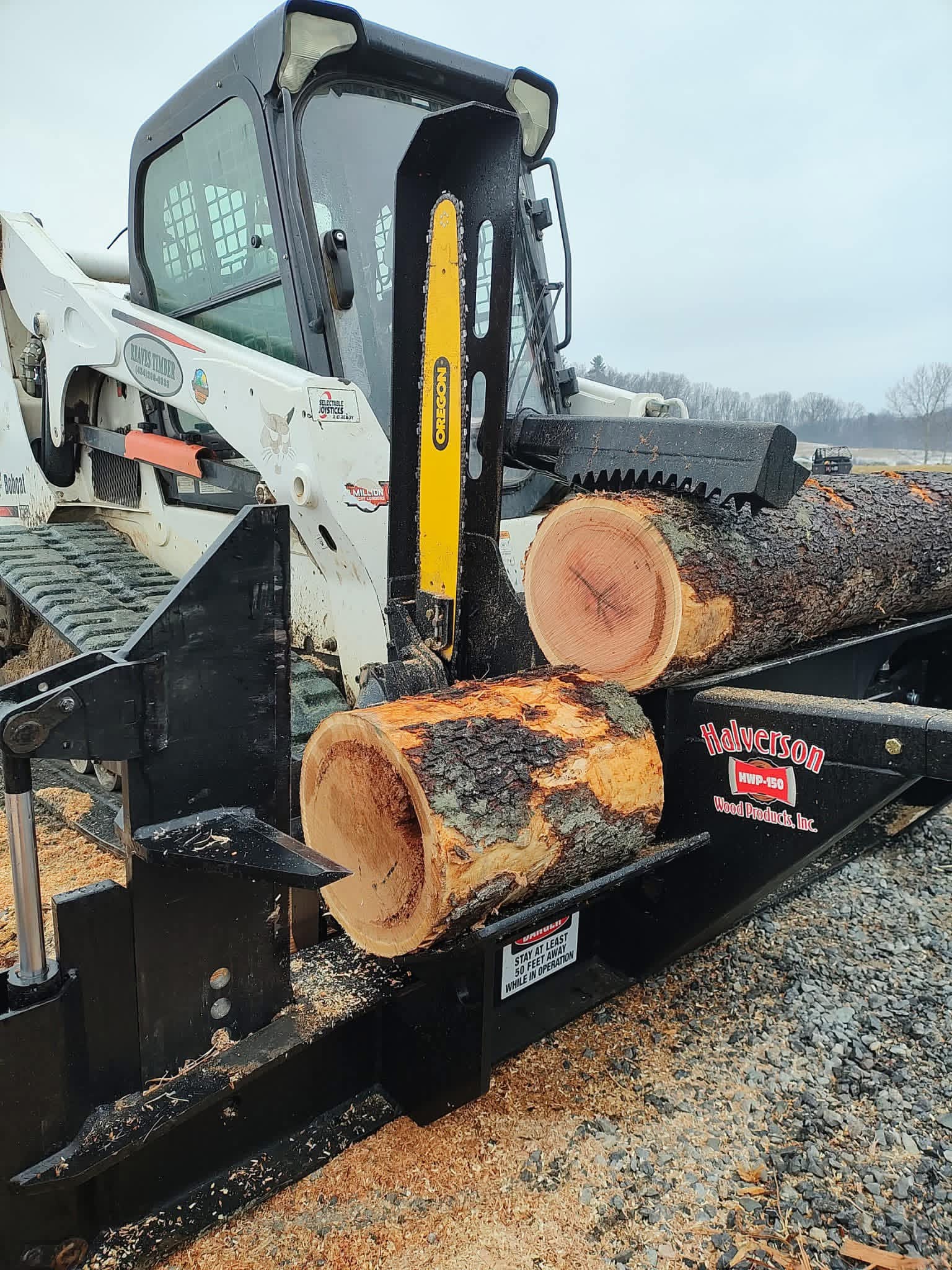
You’ve found the land. You’ve got the plans. Now comes the step most people don’t fully think through until they’re standing in the middle of a wooded lot wondering where to start: land clearing.
If you’re building a new home in Lynchburg, Bedford, Amherst, or the surrounding counties of Central Virginia, land clearing is the first major step — and getting it right sets the tone for everything that follows. At Reaves Timber of Virginia, we’ve been clearing land for new construction across this region for over 75 years. Here’s what every landowner and homebuilder should know before the first tree comes down.
WHAT DOES LAND CLEARING FOR NEW CONSTRUCTION ACTUALLY INVOLVE?
Land clearing is more than just cutting down trees. A full clearing job for a new home build typically includes:
- Tree felling and removal
- Stump grinding or full stump removal
- Brush and undergrowth clearing
- Log and debris hauling
- Rough grading to prepare the site for excavation
The scope depends on your lot — a half-acre wooded parcel in Lynchburg looks very different from a 10-acre tract in rural Bedford County. Either way, the goal is the same: a clean, accessible site that your excavator and builder can work with.
DO YOU NEED PERMITS TO CLEAR LAND IN THE LYNCHBURG AREA?
This is one of the most common questions we hear, and the answer depends on your location and project size.
In most of Virginia, clearing land on private property does not require a permit as long as you’re not disturbing streams, wetlands, or protected areas. However, if your project involves more than 2,500 square feet of land disturbance, you’ll likely need a Virginia Erosion and Sediment Control (ESC) permit. For larger projects (one acre or more of disturbance), a Virginia Stormwater Management permit may also apply.
Local zoning and building departments in Lynchburg City, Bedford County, and Amherst County may have their own requirements on top of state rules. Our recommendation: check with your local planning office and pull any required permits before clearing begins. A reputable land clearing company will walk you through this — if they don’t mention permits at all, that’s a red flag.
HOW MUCH DOES LAND CLEARING COST IN CENTRAL VIRGINIA?
Pricing varies based on several factors:
- Acreage: More land means more time and equipment.
- Tree density and size: A lot covered in mature hardwoods takes more work than one with scrubby pines and brush.
- Terrain: Steep slopes or wet ground slow equipment down and increase costs.
- Stump removal: Grinding stumps adds cost but is usually necessary for a proper foundation.
- Debris disposal: Hauling logs and brush off-site costs more than grinding in place.
One important advantage of working with a logging and land clearing company like Reaves Timber: if your property has marketable timber, we can often offset clearing costs — or in some cases eliminate them entirely — by purchasing the valuable trees we remove. Many homebuilders don’t realize the trees on their lot have real value. We’ll assess that upfront.
WHAT TO EXPECT DURING THE CLEARING PROCESS
A well-run land clearing job follows a predictable sequence:
- Site walkthrough. We walk the property with you, identify the clearing boundaries, flag any trees you want to keep, and note access points for equipment.
- Permitting and planning. Any required permits are pulled before work begins. We also plan the equipment access routes to minimize damage to the surrounding land.
- Tree felling and processing. Merchantable timber is cut and loaded for the mill. Other trees are felled and processed on-site.
- Stump grinding and brush clearing. Stumps are ground down (or fully removed depending on your foundation plans) and brush is cleared.
- Log and debris hauling. Logs, tops, and debris are removed from the site or chipped in place depending on your preference and site conditions.
- Rough cleanup. The site is left in a condition ready for your excavator to begin grading and foundation prep.
The timeline depends on acreage and conditions, but most residential clearing projects in the Lynchburg area are completed within one to three days.
CLEARING VS. FORESTRY MULCHING: WHICH IS RIGHT FOR YOUR BUILD SITE?
You may have seen ads for forestry mulching services in the area. Mulching uses a specialized machine to grind trees and brush into mulch in place — no hauling required. It’s a good option for light clearing, trail-cutting, or land you’re not building on immediately.
For a new home construction site, however, traditional clearing is usually the better choice. Here’s why:
Foundations require stump-free, compacted soil. Mulching leaves organic material in the ground that can shift and decompose under a foundation over time. For driveways, septic systems, and building pads, you want stumps fully removed and the ground ready for proper grading — not covered in a layer of mulch.
If you’re clearing a large tract and only building on part of it, a combination approach often works well: traditional clear-cutting on the build footprint and driveway corridor, mulching on the surrounding acreage you want to manage without hauling debris.
WHY CHOOSE A LOCAL COMPANY FOR YOUR CLEARING JOB?
Central Virginia terrain — rolling hills, red clay soil, seasonal wet areas along creek bottoms — requires a crew that knows the land. A company from outside the region may underestimate the challenges of steep grades or waterlogged ground in spring, leading to delays and unexpected costs.
Reaves Timber has been working this exact terrain for generations. We’re based in Big Island, VA, just 17 miles from Lynchburg, and we’ve cleared land across Bedford, Amherst, Appomattox, and Campbell Counties. We own and operate our own equipment, which means no subcontractor markups and direct accountability from the first phone call to the final cleanup.
We also understand the local timber market. If your lot has valuable hardwoods — red oak, poplar, hickory — we can tell you what they’re worth before we quote the job. That transparency is something we’ve built our reputation on.
QUESTIONS TO ASK ANY LAND CLEARING COMPANY BEFORE YOU HIRE
Before you sign anything, make sure you get clear answers to these questions:
- Are you licensed and insured in Virginia?
- Do you handle permit requirements, or is that my responsibility?
- What happens to the timber and debris you remove?
- Will stumps be ground or fully removed?
- How do you handle site access without damaging surrounding areas?
- What does the site look like when you’re done?
- Do you have references from similar projects in this area?
A trustworthy contractor will answer all of these without hesitation.
READY TO CLEAR YOUR LOT IN THE LYNCHBURG AREA?
Whether you’re breaking ground on a new home or preparing a larger tract for development, Reaves Timber of Virginia has the equipment, experience, and local knowledge to get your site cleared efficiently and professionally.
We serve Lynchburg, Bedford, Amherst, Appomattox, Campbell, and the surrounding counties of Central Virginia. Contact us for a free site evaluation and quote.
Contact us today: https://reavestimberva.com/contact
Reaves Timber of Virginia, Inc. · 1036 Bell Hill Rd, Big Island, VA 24526