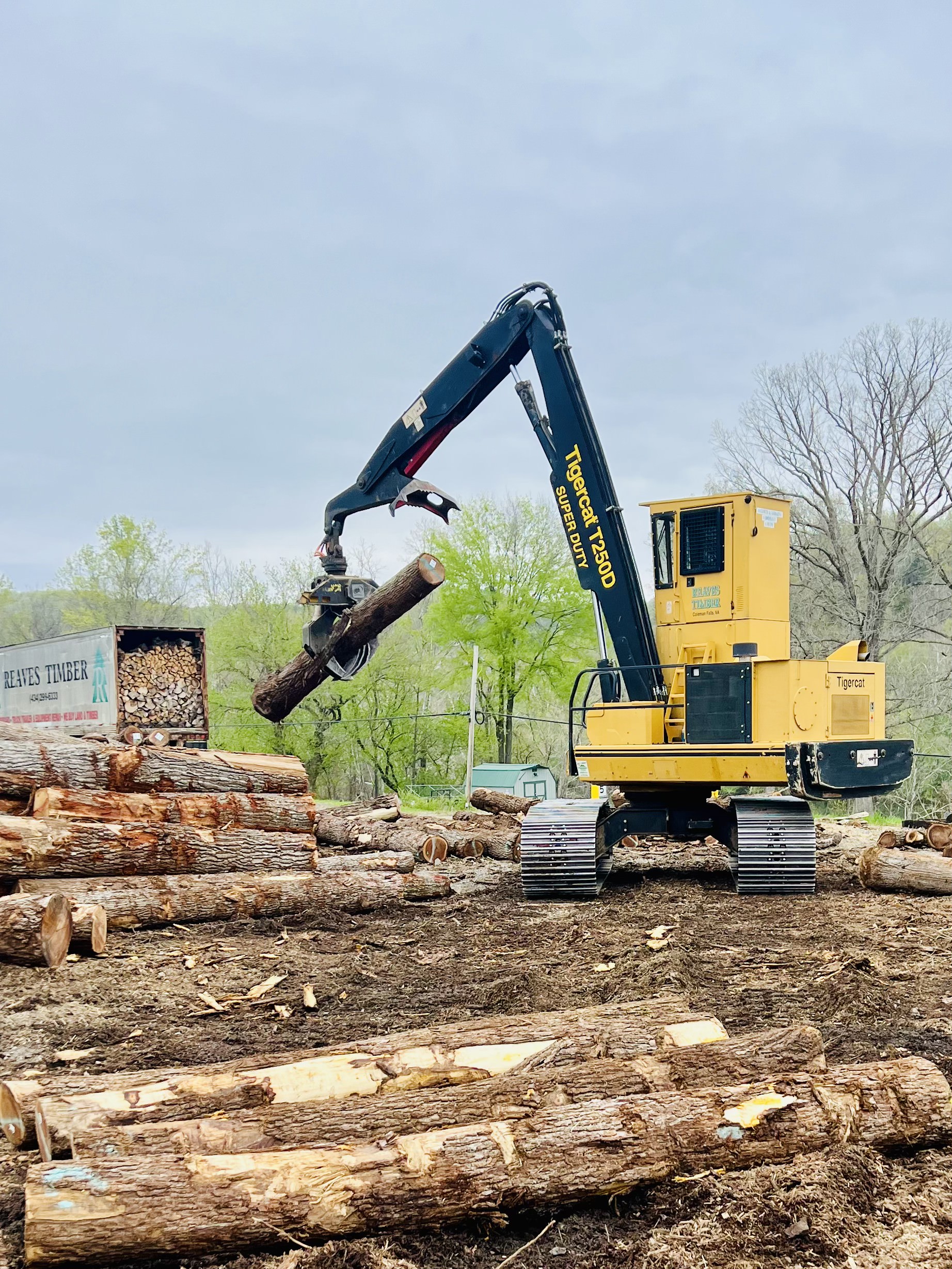
If you own wooded land in Big Island, Lynchburg, Bedford, or surrounding areas of Central Virginia, you may be considering harvesting timber but feel unsure which method is best for your property.
Two common harvesting approaches are select cutting and clear cutting. Each serves a purpose, and the right choice depends on your land, your goals, and your long-term plans.
At Reaves Timber, we work with landowners across Bedford County, Amherst County, Campbell County, Lynchburg City, and nearby communities to determine the most responsible and beneficial approach.
What Is Select Cutting?
Select cutting (also called selective harvesting) involves removing specific trees while leaving most of the forest intact.
This method is often used when landowners want to:
- Improve overall forest health
- Remove mature, diseased, or damaged trees
- Maintain long-term timber production
- Preserve the natural wooded appearance
- Protect wildlife habitat
By removing only certain trees, the remaining forest receives more sunlight, nutrients, and growing space. Over time, this can increase the value and strength of the remaining stand.
For many Central Virginia landowners who plan to keep their property wooded long term, select cutting is often the preferred option.
What Is Clear Cutting?
Clear cutting involves harvesting most or all trees within a designated area.
While the term sometimes carries a negative reputation, clear cutting can be appropriate and responsible when done correctly and for the right reasons.
Clear cutting may make sense when:
- A timber stand has reached full maturity
- The land is being prepared for construction
- You are converting property to pasture or agriculture
- Storm damage or disease has affected large areas
- Regenerating a new, healthy forest is the goal
In areas around Big Island and Bedford County where property owners are preparing land for homes, barns, or driveways, clear cutting is often the most practical solution.
Key Differences Between Select Cutting and Clear Cutting
Select cutting removes specific trees and maintains much of the forest canopy. It supports long-term timber growth and minimizes visual change.
Clear cutting removes most or all trees in a section. It opens the land completely and often maximizes immediate harvest value or prepares the land for development.
Both methods can be responsible and beneficial when applied correctly. The right choice depends entirely on your long-term vision for the property.
How to Decide What’s Best for Your Property
If you’re unsure which approach makes sense, consider the following:
- Do you want to maintain a wooded property long term?
- Are you planning to build or develop the land?
- Is wildlife habitat a priority?
- Are you focused on immediate income from timber?
- What is the current health and maturity of your forest?
There is no one-size-fits-all answer. An on-site evaluation is the best way to determine which harvesting method fits your goals in Lynchburg, Bedford County, or surrounding areas.
Responsible Timber Harvesting in Central Virginia
At Reaves Timber, we have worked with landowners across Central Virginia for decades. Our approach focuses on:
- Understanding your long-term goals
- Evaluating forest health
- Protecting soil and water resources
- Operating safely and professionally
- Providing honest guidance
Whether select cutting or clear cutting is appropriate for your land, proper planning and responsible execution are what matter most.
If you are considering harvesting timber in Big Island, Bedford, Lynchburg, or nearby counties, contact Reaves Timber for a consultation. We would be glad to help!